Infrastructure
China Is Building A Huge Eco-City Where No One Will Need To Drive

Image: Imagined car-free 'Great City'. © Adrian Smith + Gordon Gill Architecture.
businessinsider.com - November 2nd, 2012 - Alex Davies
Outside Chengdu, in central China, a 78 million square foot site has been determined for an unconventional sort of construction project. It will be a city built from scratch, for 80,000 people, none of whom will need a car to get around.
The "Great City" is a plan for an ambitious urban center designed to limit its residents environmental impact by producing clean energy, reducing waste, and promoting public transportation over individual car use.
(VIEW COMPLETE ARTICLE)
Stop Talking About the Weather and Do Something: Three Ways to Finance Sustainable Cities
Submitted by Albert Gomez
hbswk.hbs.edu - November 6th, 2012
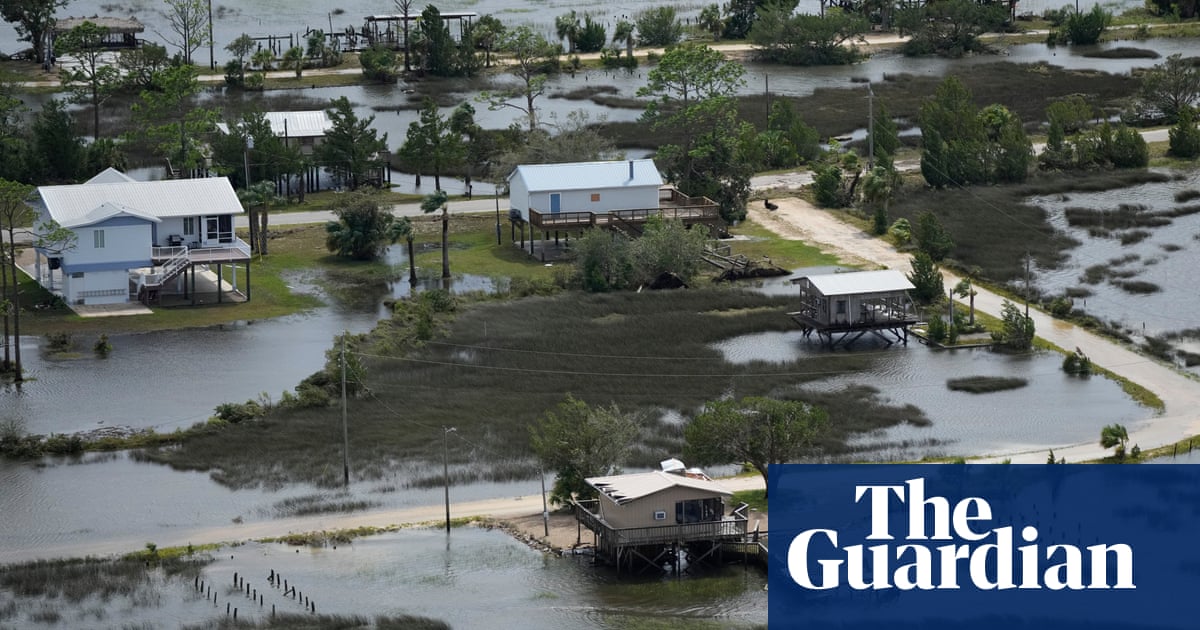
The wrath of Hurricane Sandy has illuminated a fundamental question: How do we ensure that our cities are resilient in the face of inevitable future disasters? A destroyed city is not a sustainable city. I'm making the case that it's time to stop complaining about climate change.
(VIEW COMPLETE ARTICLE)
Great City: Adrian Smith + Gordon Gill Unveil Plans For China's First Self-Sufficient, Carless City

Image: Design mock-up of the self-sufficient carless city.
submitted by Samuel Bendett
inhabitat.com - October 25th, 2012 - Beth Buczynski
Many may perceive China as a crowded, polluted country, but that legacy is changing. Chicago-based Adrian Smith + Gordon Gill Architecture just unveiled its master plan for Chengdu Tianfu District Great City, a self-sustaining satellite city that offers a solution to the problems of overburdened infrastructure and high pollution levels that assail many of China’s major urban centers.
The project envisions a city that avoids the high energy consumption and carbon emissions associated with suburban sprawl. According to the architects, Great City will be developed by Beijing Vantone Real Estate Co., Ltd. over the next eight years. When completed, it will be home to about 30,000 families totaling 80,000 people.
(VIEW COMPLETE ARTICLE)
MSN's The Cities Issue

Image: The Cities Issue logo.
foreignpolicy.com
Our special issue dedicated to the cities of the future has its eye squarely toward China, because the cities of the future are increasingly going to be speaking Mandarin -- even more than you realize. It's no longer news that China has embarked on the largest mass urbanization in history, a monumental migration from country to city that will leave China with nearly a billion urbanites by 2025 and an astonishing 221 cities with populations over 1 million. But this isn't just about size: It's about global heft.
Most Power Restored After India Hit by Second, Even Larger Outage

Heavy traffic backs up at a toll gate along a highway on the outskirts of New Delhi as power outages leave half of India without power Tuesday, July 31.
cnn.com - by Harmeet Shah Singh - July 31, 2012
New Delhi (CNN) -- India suffered its second huge, crippling power failure in two days Tuesday, depriving as much as half of the vast country, up to 600 million people, of electricity and disrupting transport networks for several hours.
The first power grid collapse, on Monday, was the country's worst blackout in a decade. It affected seven states in northern India that are home to more than 350 million people.
But Tuesday's failure was even larger, hitting eastern and northeastern areas as well. Both blackouts cut power in the Indian capital, New Delhi, and left people sweltering in high heat and humidity.
Pictures: 10 Green-Tech City Solutions for Beating the Heat

Image: Singapore supertrees. Photograph by Wong Maye-E, AP
Tasha Eichenseher - July 26th, 2012 - news.nationalgeographic.com
A series of images and short articles by the National Geographic showcase green technology in cities across the world used to mitigate the 'heat island effect'.
The Information Architecture of Emergency Response
Reference URL: http://2012.iasummit.org/schedule/the_information_architecture_of_emerge...
Date & Time: Friday, 23 March 10:30am — 11:15am
Speaker: Noreen Whysel
"The Information Architecture of Emergency Response: We will explore the evolution of technology in emergency response, with a special focus on advances in geographic systems, incident management, social media and policy in New York City since September 11, 2001. What technologies do emergency responders in NYC use? How have events like 9/11 and other incidents influenced technology advances? What effect, if any, has the change from a Law Enforcement Mayor to a Media Mayor had on data policy? What are the challenges and opportunities of open government data? How is social media being used in NYC and elsewhere to engage the public in emergency preparedness and response? And, finally, are app contests and hackathons an effective way to improve public services in difficult economic times? The session will conclude with a Town Hall discussion of how the IA community can support emergency response efforts throughout each of our own neighborhoods."
Resilience Alliance
There are many definitions of resilience from simple deterministic views of resilience anchored in Newtonian mechanics to far more dynamic views of resilience from a systems perspective, including insights from quantum mechanics and the sciences of complexity. One baseline perspective of resilience sees it in terms of the viability of socio-ecological systems as the foundation for sustainability. For those that are ready to look beyond resilience as the ability to return to the "normal state" before a disaster, take a look at:
Mesh Cities
What does it take to become a smart city? Why are mesh cities important to sustainability?
For more information: