Nuclear Issues
The mission of this working group is to focus on discussions about nuclear issues.
FAS - Regulating Japanese Nuclear Power in the Wake of the Fukushima Daiichi Accident
Federation of American Scientists - fas.org - by Katie Colten
May 13, 2013
The 2011 accident at the Fukushima Daiichi nuclear power plant was preventable. The Great East Japan earthquake and the tsunami that followed it were unprecedented events in recent history, but they were not altogether unforeseeable. Stronger regulation across the nuclear power industry could have prevented many of the worst outcomes at Fukushima Daiichi and will be needed to prevent future accidents.
In a new FAS issue brief, Dr. Charles Ferguson and Mr. Mark Jansson review some of the major problems leading up to the accident including the lack of regulation of the nuclear power industry and slow updates to safety requirements, such as using probabilistic safety assessment (PSA) methods to improve accident management plans.
Radioactive Fish Found In California: Contamination From Fukushima Disaster Still Lingers

A fisherman displays his haul of Bluefin Tuna.
huffingtonpost.com - by Aaron Sankin - February 22, 2013
Nearly two years after a powerful earthquake triggered a leak at Japan's Fukushima Dai-ichi nuclear plant, the effects of that disaster are still being felt on the other side of the planet.
A report released earlier this month by researchers at Stanford University's Hopkins Marine Station found that bluefin tuna caught just off the California coast tested positive for radiation stemming from the incident.
The study looked at the levels of radiocesium, one of the most common results of nuclear fission reactions, in Pacific Bluefun Tuna--largely as way to track the species' migratory patterns as the fish make their cross-oceanic journey in search of prey.
Wind Surpasses Nuclear in China
Image: Graph of wind- vs nuclear-generated electricity in China.
earth-policy.org - February 19th, 2013 - J. Matthew Roney
Wind has overtaken nuclear as an electricity source in China. In 2012, wind farms generated 2 percent more electricity than nuclear power plants did, a gap that will likely widen dramatically over the next few years as wind surges ahead. Since 2007, nuclear power generation has risen by 10 percent annually, compared with wind’s explosive growth of 80 percent per year.
(VIEW COMPLETE ARTICLE)
MAFF Permits Rice Planting in Evacuation Zone/Fukushima City Rice Started Being Served for School Lunch
Fukushima Diary Posted by Mochizuki on January 21st, 2013 · 1 Comment Share on twitterShare on linkedinShare on facebookShare on emailMore Sharing Services Ministry of Agriculture, Forestry and Fisheries permitted rice planting in 96 households (73 ha) of evacuation zone in Tamura city Fukushima, where the annual dose is under 20mSv/y. They also permitted 1200 households to produce rice in Fukushima, Soma, Nihonmatsu and Da-te city, where is 380 ha in total. In 2012, rice planting was not permitted in these areas. In order to preserve rice field and the motivation of farmers, MAFF is going to permit rice planting in other evacuation zones (under 20mSv/y) on the requests residents too. http://blog.goo.ne.jp/okawaraarishige/e/d9ec2e8fd74f89f867a012005e7b2f81
Cleanup Crews Near Fukushima Plant Dump Waste in Rivers, Newspaper Reports
By ROBERT MACKEY According to Japan’s Asahi Shimbun, cleanup crews working near the ruined Fukushima Daiichi nuclear plant, “dumped soil and leaves contaminated with radioactive fallout into rivers.”
![]()
Calculating the global health consequences of the Fukushima nuclear disaster
submitted by Luis Kun
homelandsecuritynewswire.com - July 18th, 2012
Radiation from Japan’s Fukushima Daiichi nuclear disaster may eventually cause approximately 130 deaths and 180 cases of cancer, mostly in Japan, Stanford researchers have calculated. The estimates have large uncertainty ranges, but contrast with previous claims that the radioactive release would likely cause no severe health effects. The numbers are in addition to the roughly 600 deaths caused by the evacuation of the area surrounding the nuclear plant directly after the March 2011 earthquake, tsunami, and meltdown.
(VIEW COMPLETE ARTICLE)
Fukushima Disaster “a Profoundly Man-Made Disaster”: Investigative Commission
submitted by Luis Kun
Homeland Security News Wire - July 5, 2012
Executive Summary - Slideshare
Executive Summary - (88 page .PDF file)
The commission investigating the Fukushima disaster of March 2011 concluded that although the combination of the tsunami and earthquake was unprecedented in its ferocity, the disaster was largely man-made because it was amplified by what came before it and what followed it. The disaster itself, the Fukushima Nuclear Accident Independent Investigation Commission, said was sandwiched by practices and conduct which were the result of government-industry collusion and the worst conformist conventions of Japanese culture.
Japan, Ukraine to Perfect Post Nuclear Accident Response
submitted by Samuel Bendett
KYIV, Ukraine, April 18, 2012 /PRNewswire/ --
Japan and Ukraine will join their efforts in liquidation of the consequences of nuclear disasters. The respective Resolution on Deepening the Relations with Ukraine has been unanimously approved by the House of Representatives of the National Diet of Japan (the bicameral legislative body of the country).
The resolution of the Japanese parliament lists the lamentable experience that both Ukraine and Japan have had with nuclear plants accidents as the basis for the ensuing bilateral cooperation. The two countries resolved to sustain world peace and further their partnership in perfecting post-accident response to nuclear emergencies according to the recently signed agreement. Interestingly, Ukraine has four functioning nuclear plants, while Japan boasts 16.
Senator Wyden: Fukushima Worse Than Reported
The Fourth Reactor at Fukushima on February 20, 2012. The yellow area is the containment vessel. (photo: The Asahi Shimbum Digital)
by Roberta Rampton, Reuters - readersupportednews.org - April 17, 2012
Japan, with assistance from the U.S. government, needs to do more to move spent fuel rods out of harm's way at the tsunami-stricken Fukushima Daiichi nuclear plant, said U.S. Senator Ron Wyden on Monday.
Wyden, a senior Democratic senator on the Senate Energy committee, toured the ruined Fukushima plant on April 6, and said the damage was far worse than he expected.
"Seeing the extent of the disaster first-hand during my visit conveyed the magnitude of this tragedy and the continuing risks and challenges in a way that news accounts cannot," said Wyden in a letter to Ichiro Fujisaki, Japan's ambassador to the United States.
Last March, an earthquake followed by a tsunami wrecked the Fukushima plant, causing the world's worst nuclear accident in 25 years and prompting global scrutiny of the safety of nuclear power plants.
Fukushima Reactor Water Level Shallower Than Thought
yomiuri.co.jp - March 28, 2012
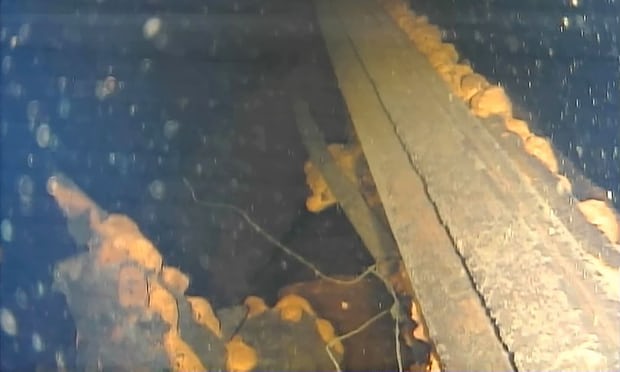
The water level in the containment vessel of the No. 2 reactor at the Fukushima No. 1 nuclear power plant is only about 60 centimeters deep, far shallower than previously assumed levels of about four meters, according to Tokyo Electric Power Co.
The lower-than-expected water level was discovered for the first time when the power utility used an industrial endoscope to check the crippled reactor's interior on Monday, TEPCO said.
According to some experts, it is possible that nuclear fuel that melted through the reactor's pressure vessel and accumulated on the bottom of the containment vessel in the aftermath of the March 11 earthquake and tsunami may not be completely covered in the water.
TEPCO said the water temperature in the vessel remained relatively low within a range of 48.5 C to 50 C. The discovery of the unexpectedly shallow water level will not affect TEPCO's judgment that the reactor is in a state of "cold shutdown."
Molecule May Aid Nuclear Waste Clean-Up

Molecules cause radioactive waste to cluster, facilitating cleanup // Source: kokokuxhito.info
submitted by Luis Kun
Homeland Security News Wire - March 14, 2012
Scientists have produced a previously unseen uranium molecule in a move that could improve clean-up of nuclear waste.
The distinctive butterfly-shaped compound is similar to radioactive molecules that scientists had proposed to be key components of nuclear waste. These molecules, however, were thought too unstable to exist for long.
A University of Edinburgh release reports that researchers have shown the compound to be robust, which implies that molecules with a similar structure may be present in radioactive waste.
University of Edinburgh scientists, who carried out the study, say their findings suggest the molecule may play a role in forming clusters of radioactive material in waste.
These are difficult to separate during clean-up. Improving treatment processes for nuclear waste, including targeting this type of molecule, could help the nuclear industry move towards cleaner power generation.