Environment
400 Parts Per Million

Image: Former Vice President Al Gore. (photo: Mario Anzuoni)
readersupportednews.org - May 11th, 2013 - Al Gore
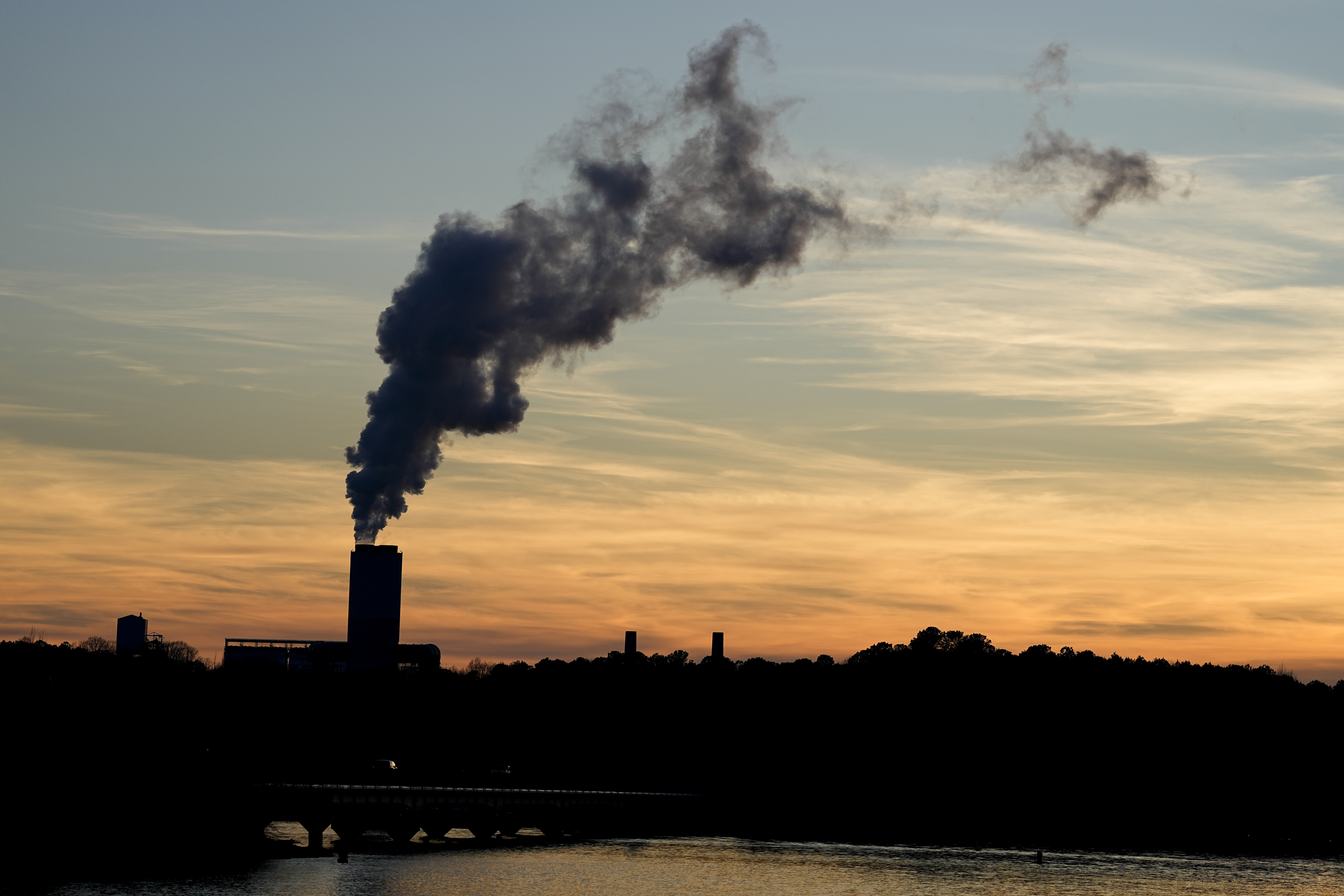
Yesterday, for the first time in human history, concentrations of carbon dioxide, the primary global warming pollutant, hit 400 parts per million in our planet's atmosphere. This number is a reminder that for the last 150 years -- and especially over the last several decades -- we have been recklessly polluting the protective sheath of atmosphere that surrounds the Earth and protects the conditions that have fostered the flourishing of our civilization. We are altering the composition of our atmosphere at an unprecedented rate.
(VIEW COMPLETE ARTICLE)
Patuca Reserve Resilience Network
Honduras' ecosystems are being destroyed at an incredible rate, taking with it the rich natural heritage of biodiversity that has required million of years to evolve. In 20 years, human populations in Honduras will be be threatend from ecosystem collapses that are likely to create abect misery and population collapses at an extraordinatry level. Already population crashes are happening in small scale collapses due to the degradation of social ecology.
There is a need to build a Patuca Reserve Resilience Network to help preserve the remaining 30% of the Patuca Reserve that has not been destroyed by deforestation and gold mining in the rivers. Association Patuca and Dr. Perinjaquet are working on introducing Resilience Capacity Zone Assessments and Mapping in order to identify solution sets local communities would embrace for preserving their environments and livelihoods, considering that they are squating within a national preserve that to date has had no environmental enforcement.
Video - TIME, GOOGLE AND NASA: Timelapse of the Earth Over the Last 30 Years
world.time.com - by Jeffrey Kluger
Spacecraft and telescopes are not built by people interested in what’s going on at home. Rockets fly in one direction: up. Telescopes point in one direction: out. Of all the cosmic bodies studied in the long history of astronomy and space travel, the one that got the least attention was the one that ought to matter most to us—Earth.
That changed when NASA created the Landsat program, a series of satellites that would perpetually orbit our planet, looking not out but down. Surveillance spacecraft had done that before, of course, but they paid attention only to military or tactical sites. Landsat was a notable exception, built not for spycraft but for public monitoring of how the human species was altering the surface of the planet. Two generations, eight satellites and millions of pictures later, the space agency, along with the U.S. Geological Survey (USGS), has accumulated a stunning catalog of images that, when riffled through and stitched together, create a high-definition slide show of our rapidly changing Earth. TIME is proud to host the public unveiling of these images from orbit, which for the first time date all the way back to 1984.
Victory! Offshore Oil Drilling Stopped in Belize
Oceana.org April 17, 2013 Jessica Wiseman

Yesterday, Belize’s Supreme Court declared offshore drilling contracts issued by the Government of Belize (in 2004 and 2007) null and void, providing a dramatic and potentially definitive setback to The Government of Belize and the petroleum prospecting companies issued the contracts.
The ruling, handed down by Justice Oswell Legall, was in response to a case brought by Oceana, COLA, and the Belize Coalition to Save Our Natural Heritage. It effectively ends the Belizean government’s immediate effort to allow offshore oil drilling in the Meso American Reef, the second largest barrier reef in the world.
The Limits of the Earth, Part 2: Expanding the Limits
Image: Limits of Earth logo.
blogs.scientificamerican.com - April 18th, 2013 - Ramez Naam
As part one of this series showed, we are up against incredible challenges: feeding a world with a rapidly growing appetite, the continuing loss of the world’s precious forests, the ongoing collapse of fish species in the oceans, the rapid depletion of our fresh water resources, and the over-arching threat of climate change, which makes all others far worse.
Ending growth isn’t a realistic option. Billions of people in the developing world want access to more resources, deserve those resources as much as those of us in the rich world do, and need them in order to rise out of poverty.
(VIEW COMPLETE ARTICLE)
The Limits of the Earth, Part 1: Problems
Image: Limits of Earth logo.
blogs.scientificamerican.com - April 17th, 2013 - Ramez Naam
The world is facing incredibly serious natural resource and environmental challenges: Climate change, fresh water depletion, ocean over-fishing, deforestation, air and water pollution, the struggle to feed a planet of billions.
All of these challenges are exacerbated by ever rising demand – over the next 40 years estimates are that demand for fresh water will rise 50%, demand for food will rise 70%, and demand for energy will nearly double – all in the same period that we need to tackle climate change, depletion of rivers and aquifers, and deforestation.
One view of these looming threats is that we’ve exhausted planet’s resources.
(VIEW COMPLETE ARTICLE)
Dennis Meadows on 'The Limits to Growth and the Future of Humanity'
Image: Dennis Meadows
carsoncenter.uni-muenchen.de - December 4th, 2012
2012 marks the 40th anniversary of the publication of The Limits to Growth. Not only has this book been translated into more than 30 languages, it has also sold more than 30 million copies, thus making it the highest selling environmental book in world history. The Limits to Growth unleashed a debate that has yet to end.
(VIEW WEBSITE)
(VIEW PDF OF PRESENTATION)
Solving Global Warming: A Silent Revolution
csi.gsb.stanford.edu - April 5th, 2013 - Bernadette
It’s a fact: global temperatures are warmer than at any time in the past 4,000 years –– the result of human activities releasing large quantities of carbon dioxide in the atmosphere. Given existing technology to reduce our carbon footprint, why aren’t we seeing bolder action to remedy the issue at home and abroad?
(VIEW COMPLETE ARTICLE)
More and More Voices Speaking Out Against Brazil’s Belo Monte Dam
Brazil’s Belo Monte Dam to Displace Thousands in Amazon www.abcnews.go.com - June 18, 2012 - Tiffany Hagler-Geard
Belo Monte Dam will be the world’s third-largest hydroelectric project and will displace up to 20,000 people while diverting the Xingu River and flooding as much as 230 square miles of rainforest in Brazil. The Brazilian government says residents forced to relocate will be compensated and that most will benefit from the relocation. Opponents of the dam are skeptical of this claim.
While environmentalists and indigenous groups oppose the dam, many Brazilians support the project. The Brazilian Amazon, home to 60 percent of the world’s largest forest and 20 percent of the Earth’s oxygen, remains threatened by the rapid development of the country. The area is currently populated by over 20 million people and is challenged by deforestation, agriculture, mining, a governmental dam-building spree, illegal land speculation including the occupation of forest reserves and indigenous land and other issues.
19-Year-Old Develops Ocean Cleanup Array That Could Remove 7,250,000 Tons Of Plastic From the World's Oceans
inhabitat.com - March 26, 2013 - Timon Singh

19-year-old Boyan Slat has unveiled plans to create an Ocean Cleanup Array that could remove 7,250,000 tons of plastic waste from the world’s oceans. The device consists of an anchored network of floating booms and processing platforms that could be dispatched to garbage patches around the world. Instead of moving through the ocean, the array would span the radius of a garbage patch, acting as a giant funnel. The angle of the booms would force plastic in the direction of the platforms, where it would be separated from plankton, filtered and stored for recycling.